
In this area of the website, we will reference various types of railway books that deserve a much wider audience. Some will still be available to buy new, whilst others will only be available from the secondhand market place.
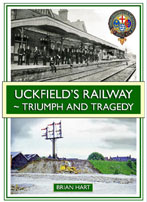 UCKFIELD’S RAILWAY ~ TRIUMPH AND TRAGEDY
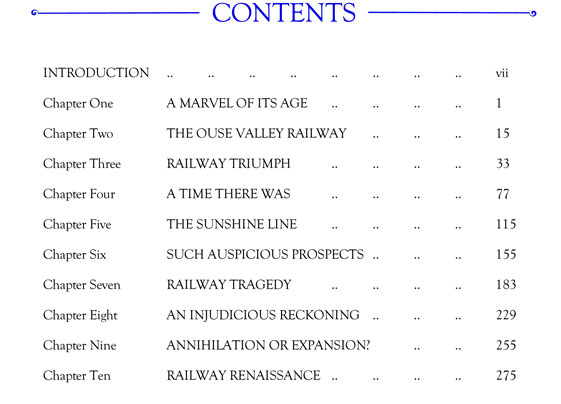
At the dawn of the great railway era, Sussex was transformed when the London to Brighton line opened in 1841. The railways positively boosted the towns and counties they served, bringing trade and prosperity. Investors were keen to subscribe to this ‘Marvel of its Age’ as the network of lines was so diligently crafted.
Uckfield was reached in 1858 when the railway coming up from Lewes opened to great rejoicing. Apart from farmers and tradesmen who benefited from this marvellous development, local people were fascinated by this new means of travel which enabled them to journey in speed and comfort compared with the slow, expensive and unreliable alternative offered by horse-drawn coaches. Consequently, excursions brought people and trade into hitherto inaccessible parts of Sussex.
Sussex’s network was largely financed by private investment in the magnificent London, Brighton & South Coast Railway. The LB&SCR was keen to establish its territory from its competitors; namely the South Eastern Railway and the London, Chatham & Dover Railway companies, who were also fighting each other in their aim to spread rapidly throughout Kent. However, the financial crisis of 1866 brought many projects to a standstill, notoriously the LB&SCR’s Ouse Valley Line. Today, its remains at Uckfield continue to fascinate people. The author, similarly intrigued, was therefore determined to unearth its story and provide the most comprehensive account ever of this famously doomed railway.
Whereas all work on the Ouse Valley Railway ceased in 1867 – never to restart – some projected lines to Uckfield, such as the railway from Hartfield across Ashdown Forest, as well as the ‘East Sussex Junction Railway’ and the ‘Sussex Central Railway’ went no further than the drawing board.
Fortunately, the LB&SCR went on to extend its Brighton and Uckfield line to Tunbridge Wells, then up to Oxted, so that by 1890 it had created a superlative network linking Sussex, Surrey and Kent.
The intriguing story of how this all came about during the Victorian era has been thoroughly researched and is explained by the author, intertwined with a rich mixture of everyday occurrences which considerably bring his narrative to life.
Many improvements followed in the late-Victorian and Edwardian era whilst numerous events involving the railway are featured. This was both an exciting and challenging time and one of great advancement until the outbreak of the First World War changed life in many ways.
Absorbed into the Southern Railway in 1923, popularly known as ‘The Sunshine Railway’, travel by train grew rapidly – for commuting, school journeys, day-trips, weekend excursions – and happy holiday-times.
Alongside chronicling the life and times of the railway, its staff, the mishaps and the day-to-day events, the book features over 400 illustrations, including many hitherto unpublished photographs which bring a wholly-new perspective to the history of the wonderful Uckfield Line throughout these years of steam and are superbly presented here.
As the age of steam on the Southern Region began drawing to a close, further electrification was planned. In 1957 BR announced work on electrifying all the so-called ‘Oxted Lines’ (South Croydon to Lewes via Uckfield and also to Tunbridge Wells West) would start in 1962. Electric trains were promised to commence operating by 1964. However, these lines were already so busy and alongside new housing estates and fast-developing commuter traffic, BR was forced into introducing its ‘Oxted Lines Interim Dieselisation Plan’ as an urgent stopgap solution.
So what happened....?
Why wasn’t the railway electrified from South Croydon to Tunbridge Wells and to Lewes via Uckfield – exactly as planned by 1964?
Why was the Uckfield Line lumbered instead with increasingly ageing diesel trains – and subsequently left to rot?
Why did this important main line connecting Sussex / Kent / Surrey end up being destroyed when it was about to be modernised?
Why did BR then reduce sections of the Uckfield line to single track, reducing capacity and leaving the Brighton Line to become even more congested and over-crowded?
Why have no lines ever been reopened in the jam-packed South East?
Why do trains today stop at Uckfield and can no longer run directly to Brighton and all the popular Sussex Coastal towns?
Who was responsible for this happening?
Why have persistent calls for over 50 years to reinstate the Uckfield Line’s connections never been successful?
To answer all these questions and see the full supporting evidence, you need to buy your own copy of this amazing and well researched book that is now available direct from Wild Swan Books, some Heritage Railway shops or your usual local or on-line bookshop under ISBN 978 1 912038 97 8
Railway Preservation Societies and the General Public will be amazed at the shenanigans that are revealed. It is truly a shocking story which must be told and kept in the public domain.
Uckfield’s Railway ~ Triumph and Tragedy chronicles the events across 180 years from 1840 to 2020. As its title indicates, it reveals a story of quite stupendous achievement by its Victorian builders, the venerable London Brighton & South Coast Railway, followed by the progressive and highly-successful Southern Railway until 1948. What should have continued being a railway with a particularly bright and prosperous future was then quite deliberately and ruthlessly sabotaged.
This extremely high-quality book and designed by the author is published under the brand of renowned Wild Swan Books Ltd, based in Bath, Somerset.
Comprising 296 pages, it is printed on high-quality art paper, A4 size (210mm x 297mm). It is casebound in dark green boards with gilt-lettered spine and has a full-colour laminated jacket.
Each copy comes with a specially-produced laminated card bookmark as an aid to enjoying this story.
ISBN 978 1 912038 97 8 Price £39.95
The following books listed are by respected Sussex railway author and historian, Brian Hart, whose books were usually published by Wild Swan Publications until they sold their business to the Titfield Thunderbolt Bookshop in December 2014, from which date they are published under the Wild Swan Books imprint. The original book price may seem expensive to some, but when you realise the number of pages each book contains, and that it is a hardback edition, the price "per page" is not unrealistic. In addition, newly published books are not only prepared and published in the UK but are also printed and bound in the UK to a very high standard.
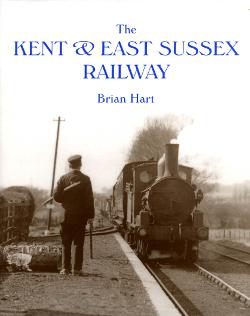
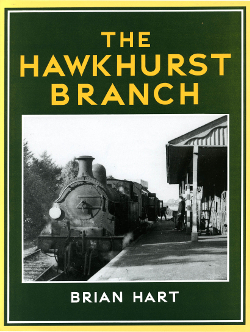
All Brian Hart's book Covers and Content details will continue to be featured on this website.
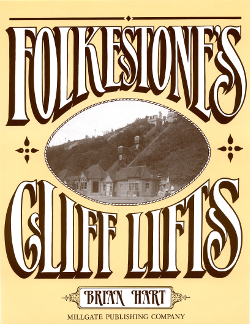 In addition to the hardback books published by Wild Swan, and listed above, Brian Hart has also published non-railway titles in paperback under the Millgate Publishing imprint.
With the exception of "The Golden Age of Folkestone's Cinemas", these books are only available from the secondhand market place.
| Book Title | ISBN | Publish Date | Pages |
| Elham Valley Reflections | 9780951045428 | 1989 | 92 |
| Folkestone's Cliff Lifts | 0951045407 | 1985 | 48 |
| Uckfield - Portrait of a Wealden Town | 9780951045411 | 1988 | 64 |
| Golden Age of Folkestone's Cinemas | 9780951045435 | 2016 | 80 |
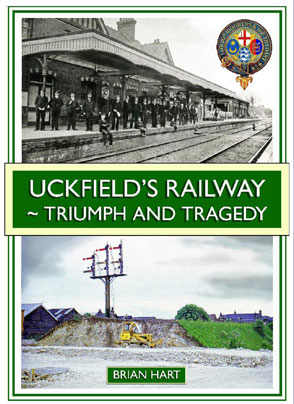
A new book is about to be published entitled "Uckfield's Railway ~ Triumph and Tragedy" :- An extensive history of the Uckfield Railway Line by well-known railway author Brian Hart. The book is A4 size and 296 pages printed on top-quality paper, casebound with gilt-lettered spine, plus laminated full colour dust jacket.
The Publisher is Wild Swan Books Ltd, ISBN 978 1 912038 97 8 and it’s priced at £39.95
As its title indicates, it reveals a story of quite stupendous achievement by its Victorian builders ~ a railway whose bright and prosperous future was then deliberately and ruthlessly sabotaged.
A sizeable proportion of the photographs have never before been published and there are plenty to please steam enthusiasts, as well as thorough descriptions of the railway’s working life from early beginnings in 1840 up to 1960 when electrification was fully-promised.
The story then continues through the DEMU era, Network SouthEast, the Cowden tragedy, Connex years, the infamous Lewes-Uckfield Study, the BML2 Project and up to 2020.
The book has been fully researched over many years with many facts drawn from the National Archives and should be compulsory reading by the current Governments Transport Secretary and Ministers including the DfT and Great British Railways staff, as well as those in post with all the other opposition political parties.
Railway Preservation Societies and the General Public will be amazed at the shenanigans that are revealed. It is truly a shocking story which must be kept in the public domain.
Read the full review of this amazing book in our new RAILWAY BOOK Section
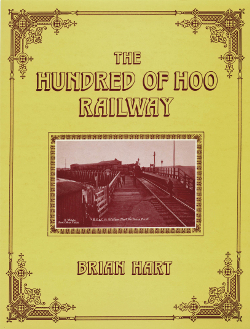
Situated on the bleak and lonely Kentish peninsula bordering the River Thames, this remarkable railway was opened in 1882 with the intention of establishing a vast continental port on the banks of the River Medway. Eventual failure left the weird and mysterious station, pier and hotel at Port Victoria isolated and rotting, but not before it had found great favour with Queen Victoria, Edward VII as well as Her Majesty’s grandson, Imperial Germany’s Kaiser Wilhelm II.
Whilst ghostly Port Victoria faded into oblivion after the Great War, the Southern Railway built a new spur to Allhallows-on-Sea, where it dreamed of creating a new suburban town and seaside resort. For a time, happy holidaymakers followed ‘Sunny South Sam’ to the empty marshes on the Thames, but this dream was likewise extinguished.
The colourful history of the Hundred of Hoo Railway is supported by a wide selection of recently discovered and hitherto unpublished photographs as well as a wide range of detailed track and signalling plans and diagrams of station buildings, including Port Victoria pier.
The Hundred Of Hoo Railway by Brian Hart ISBN 0 906867 73 8 Wild Swan Publications 84 pages Sewn with laminated card cover. OUT OF PRINT
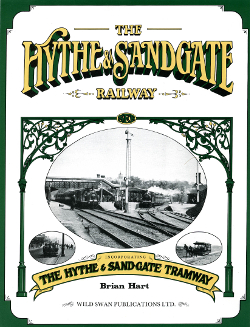
THE HYTHE & SANDGATE RAILWAY
Even though it was one of the shortest lines ever constructed by the South Eastern Railway, the Hythe & Sandgate Branch held wondrous aspirations. Devised as a new route to the continent, for thirty years the SER planned and fought for its extension through to Folkestone Harbour. Its tireless proponent, Sir Edward Watkin, used every ploy and contrivance to woo the wealthy and powerful landowners who stood in its way. As a result, this is not only the story of a 3 mile branch line, but of a struggle for supremacy that lasted for more than half a century.
With all hope of extension finally dashed, the cold dawn of economic reality forced the line to account for itself. Deliberately run down by the erstwhile Southern Railway Company, it succumbed to the policies of road before rail, eventually being truncated and singled. Surprisingly, it managed to survive for another twenty years during which time it ignominiously fell derelict and dilapidated. Belonging to an age which rightly saw the railway as the supreme mode of transport, the little branch expired in 1951 when it ceremoniously went out with a bang, defiantly determined to end just as it had begun.
This is the untold story of the Sandgate Branch, which dreamed of such grandeur as perhaps no other railway in the south has ever done.
THE HYTHE & SANDGATE TRAMWAY
The Hythe & Sandgate Tramway might be described as the progeny of the Sandgate Branch for it probably would never have materialised without the presence of the SER. Managed by the railway company, it too strove to survive against those same forces which prevented its extension and electrification. Thus thwarted, it fell easy victim to the motorised charabanc and omnibus. It may have ended up as an anachronistic oddity, but it won a firm place in the hearts of holidaymakers and locals. The writing was already on the wall when it re-opened at the end of the Great War, but it did manage to enjoy a brief Indian summer before closure in 1922.
Here is the fascinating story of this delightful tramway which gave immeasurable fun and pleasure for thirty years.
The Hythe & Sandgate Railway incorporating The Hythe & Sandgate Tramway by Brian Hart ISBN 0 906867 53 3 Wild Swan Publications
176 pages Casebound with dark green boards and gilt spine. Laminated dust jacket Published price: £18.95
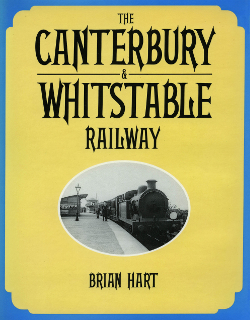
The opening of the Canterbury & Whitstable Railway in May 1830 heralded the dawn of the great railway age in southern England. On that bright, auspicious day there was great rejoicing and celebration in the ancient city of Canterbury as well as the old seaside town of Whitstable. It was a truly remarkable achievement for the visionary promoters and builders of this line which had taken five long and difficult years to construct. As the railway network rapidly spread out across Britain, the C&WR gradually faded into virtual insignificance, simultaneously suffering a lack of investment, fierce competition from road carriers and an outdated system of operation. Total financial collapse seemed inevitable until, in 1844, the South Eastern Railway stepped in and rescued the line by absorbing it within its empire.
This represented a new beginning for the old C&WR, which was improved and henceforward operated as a conventional railway. Thus began the era of real prosperity and the years of greatest interest hitherto unexplored or revealed. During its busy life the line carried tons of coal, coke, grain and other commodities from this industrious Kentish port to be distributed around the county, whilst people flocked in their hundreds at weekends and holidays to enjoy the breezy shoreline at Tankerton.
Traversing some of the most rural countryside in Kent, the railway provided a useful link between the cathedral city and the coast until 1931 when the popularity of the motor omnibus caused the loss of its passenger service. Goods traffic continued, however, remaining in the hands of the old South Eastern men and the sole charge of the much-loved ‘Rl’ locomotives. These capable engines provided spectacular sights, hauling heavily loaded trains up the severest of gradients. Total closure in 1952 saw the end of an epoch in Kent’s railway history as this most ancient and fascinating line was allowed to fade ingloriously into oblivion.
This book represents many long hours of research by the author, based on surviving original documentation, interviews with former railway employees, as well as numerous contemporary accounts depicting moments of mirth and despair. Thanks to the diligence and dedication of generations of photographers, it has been possible to assemble the largest collection of pictures ever published in a book featuring the Canterbury & Whitstable Railway.
The Canterbury & Whitstable Railway by Brian Hart ISBN 0 906867 97 5 Wild Swan Publications 192 pages Casebound with dark blue boards and gilt spine. Laminated dust jacket OUT OF PRINT
A small quantity of mint-condition copies are still available via the author. Most of these possess dust jackets. These are not secondhand but in pristine condition.